

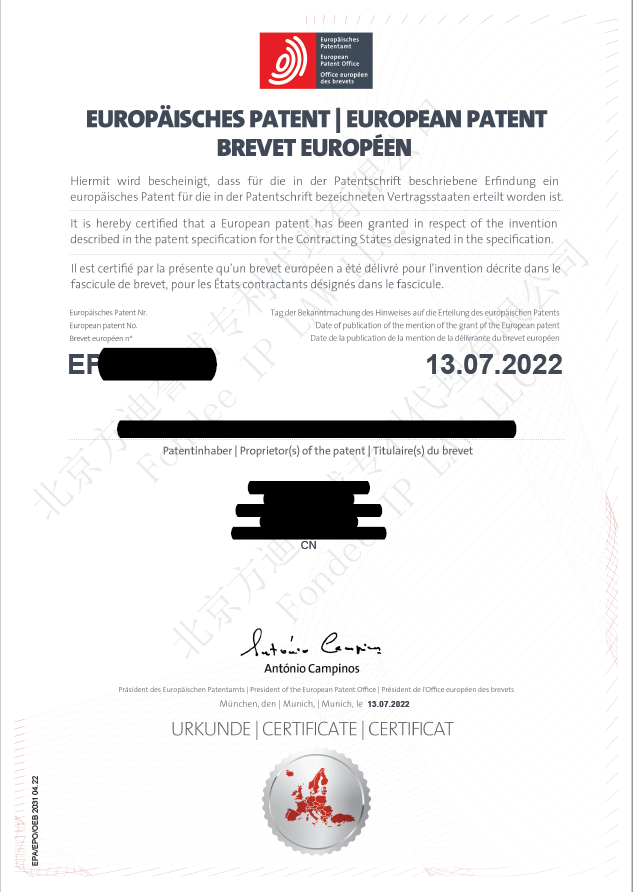
European Patent Office (EPO)
The European Patent Office (EPO) operates under the European Patent Convention (EPC) and is one of the most important centralised patent-granting authorities in Europe. By filing a single application in one of the EPO's official languages—English, French, or German—an applicant may pursue protection through a unified search, examination, and grant procedure across some or all EPC contracting states. The EPO system offers protection only for invention patents, with a statutory term of 20 years from the filing date; it does not provide for utility models.
In substantive examination, the EPO is globally known for its rigor, technical discipline, and highly structured methodology. In particular, inventive step is usually assessed through the "Problem-and-Solution Approach." The EPO also applies strict rules on patent-eligible subject matter: pure business methods, computer programs "as such," and rules for mental acts are normally excluded; methods of treatment of the human or animal body, and diagnostic methods practised on the human or animal body, are likewise excluded in principle from patentability. At the same time, computer-implemented inventions (CIIs) may still be patentable where they produce a "further technical effect" beyond the normal physical interaction between software and hardware. For mixed inventions containing both technical and non-technical features, the EPO applies the well-known COMVIK approach, under which only those features contributing to the solution of a technical problem are relevant to the inventive-step analysis.
As to post-grant proceedings and cross-border enforcement architecture, the EPO provides a central opposition mechanism. Any third party may oppose a granted European patent within nine months from publication of the mention of grant, offering a cost-efficient alternative to multiple national invalidity actions. The most significant recent development in the European patent landscape has been the launch of the Unitary Patent and the Unified Patent Court (UPC). Applicants may request unitary effect in participating EU member states, while the UPC provides a central forum for disputes involving unitary patents and, within its scope, a substantial portion of classic European patents, thereby materially reducing the historical fragmentation of patent litigation in Europe.