

Russia
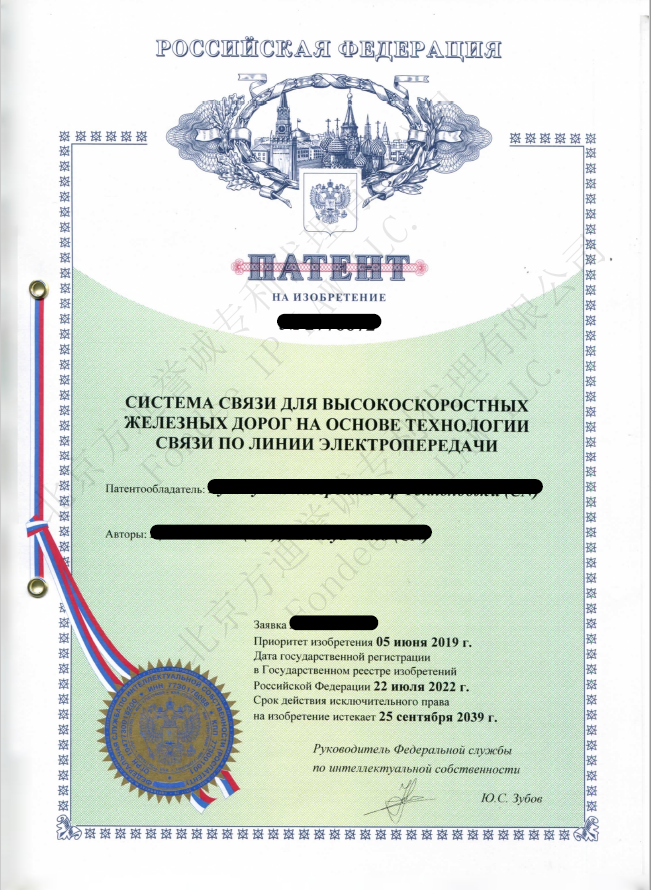
The Federal Service for Intellectual Property (Rospatent) is the authoritative body overseeing patent administration in Russia. The Russian patent framework provides protection for invention patents (with a 20-year term, and up to a 5-year extension available for pharmaceuticals) and utility models (with a 10-year term).
The substantive examination of Russian invention patents adheres to traditional international standards, requiring absolute novelty, inventive step, and industrial applicability. Regarding utility models, Russia implemented a major legislative reform in 2014, fundamentally distinguishing its system from the non-examined "registration systems" found in many other countries. Post-reform, utility model protection in Russia is strictly confined to "devices" with specific shapes or structures, expressly excluding methods, systems, and substances. More crucially, Rospatent now conducts full substantive examination for utility models (primarily assessing novelty). While this reform significantly raised the threshold for utility model grants, it has concurrently enhanced their legal certainty.
As Russia is a central member state of the Eurasian Patent Organization (EAPO), applicants have an alternative to direct national filings. By filing a single Eurasian patent application, which undergoes substantive examination by the EAPO, applicants can secure unified patent protection across several CIS countries, including Russia. This regional route is highly utilized in practice. On the front of enforcement and compulsory licensing, the Russian Civil Code provides the foundational legal framework for patent protection. However, under recent geopolitical circumstances, Russia's IP system has implemented specific defensive adjustments. For instance, the Russian government has legally expanded the scope of permissible "parallel imports," allowing specific lists of goods to be imported into Russia without the authorization of certain foreign patent or trademark owners. Additionally, for rightsholders hailing from specifically designated countries, the ability to enforce patent rights and claim statutory infringement damages has been severely restricted by targeted administrative decrees. Consequently, evaluating the current patent protection environment in Russia requires a careful consideration of its deep entanglement with macro-level international trade policies.